What is IPMP in Skincare? (And Why It's in Your Cleansing Balm)
You’ve probably seen IPMP listed on your K-beauty products and scrolled right past it. It’s not as flashy as niacinamide, not as famous as retinol, and not as trendy as centella. But here’s what the beauty industry doesn’t want you to know: IPMP might be one of the most underrated acne-fighting ingredients available.
If you’re acne-prone and nervous about oil cleansing (or already breaking out from it), IPMP could be the ingredient that changes everything.
What Is IPMP?
IPMP stands for Isopropyl Methylphenol. You might also see it called:
- 3-Methyl-4-isopropylphenol
- O-Cymen-5-ol
- Biosol
It’s an antimicrobial and antibacterial agent that’s been used in medical and personal care products for decades—but only recently gained attention in skincare, particularly in Korean beauty products.
Chemical Properties
Without getting too deep into organic chemistry:
- It’s a phenol derivative (similar structure to other antiseptics)
- Oil-soluble (which is why it works well in cleansing balms and oils)
- Stable across various pH levels
- Non-oxidizing (won’t degrade quickly like some other actives)
What this means for you: It’s effective in oil-based products where many other acne-fighting ingredients would fail.
How IPMP Works Against Acne
Unlike harsh acne treatments that dry out your skin or cause purging, IPMP works through targeted antimicrobial action.
Kills Acne-Causing Bacteria
IPMP is particularly effective against Propionibacterium acnes (now called Cutibacterium acnes)—the primary bacteria responsible for inflammatory acne.
How it works:
- Disrupts bacterial cell membranes
- Prevents bacterial growth and reproduction
- Works on contact, providing immediate antimicrobial action
The difference: Unlike benzoyl peroxide which kills everything (including good bacteria), IPMP is more selective.
Prevents Biofilm Formation
Acne bacteria form protective biofilms that shield them from your immune system and topical treatments. IPMP helps prevent these biofilms from forming.
What this means: Your other acne treatments can actually reach and work on the bacteria.
Anti-Inflammatory Action
IPMP doesn’t just kill bacteria—it also reduces the inflammatory response that causes red, swollen, painful pimples.
The benefit: Less redness and faster healing even while fighting active breakouts.
Doesn’t Disrupt Skin Barrier
Unlike many acne fighters (looking at you, benzoyl peroxide and alcohol-based products), IPMP doesn’t compromise your moisture barrier.
Why this matters: You can use it daily without the dryness, peeling, and irritation that makes acne worse.
IPMP vs Other Acne-Fighting Ingredients
Let’s compare IPMP to the heavy hitters everyone knows about:
IPMP vs Benzoyl Peroxide
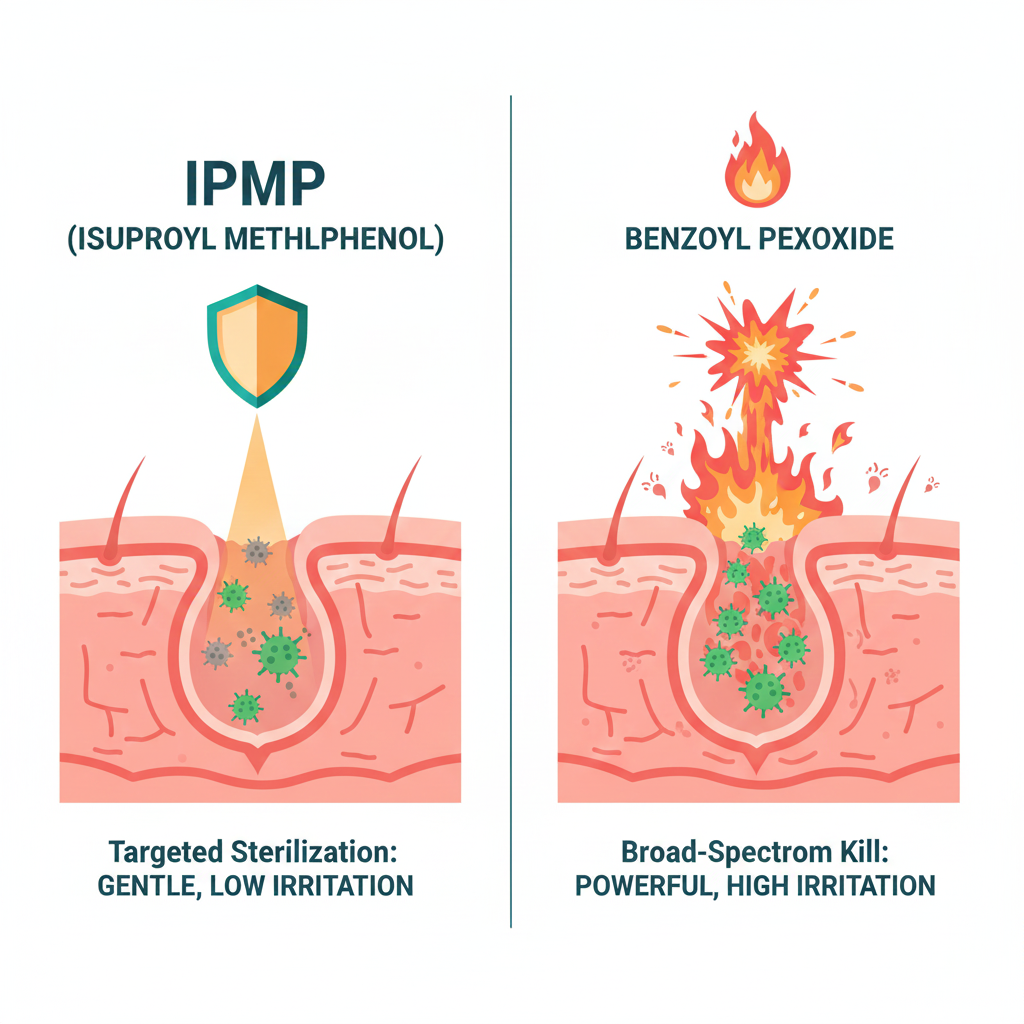
Benzoyl Peroxide:
- Kills ALL bacteria (good and bad)
- Extremely drying
- Can bleach fabrics
- Causes irritation and peeling
- Very effective but harsh
IPMP:
- More selective bacterial action
- Non-drying
- Doesn’t bleach
- Gentle enough for daily use
- Effective but mild
Winner: IPMP for sensitive skin; benzoyl peroxide for severe acne that needs aggressive treatment
IPMP vs Salicylic Acid
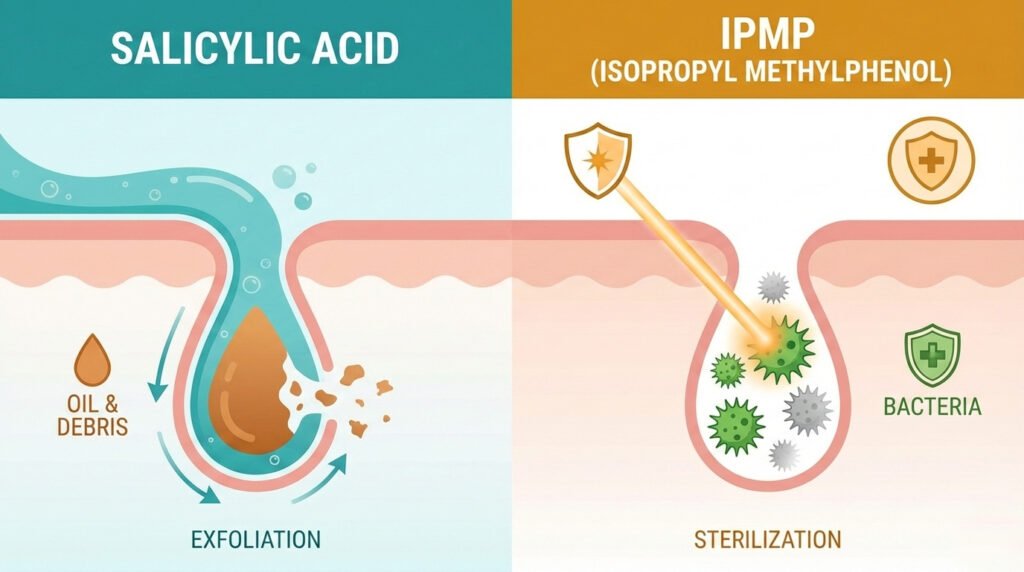
Salicylic Acid:
- BHA that exfoliates inside pores
- Can be drying
- Photosensitizing
- Works on blackheads and whiteheads
- Takes time to see results
IPMP:
- Antimicrobial, not exfoliating
- Non-drying
- Not photosensitizing
- Works on inflammatory acne
- Works on contact
Winner: They work differently—use both for comprehensive acne treatment
IPMP vs Tea Tree Oil

Tea Tree Oil:
- Natural antimicrobial
- Can be irritating at high concentrations
- Strong smell
- Inconsistent potency between products
IPMP:
- Synthetic antimicrobial
- Gentle, low irritation risk
- No smell
- Consistent concentration and effectiveness
Winner: IPMP for predictable results; tea tree for those preferring natural ingredients
Why IPMP Works So Well in Cleansing Balms
Here’s where IPMP becomes really interesting: it’s one of the few anti-acne ingredients that’s oil-soluble and works effectively in cleansing products.
The Problem with Oil Cleansing and Acne
Many acne-prone people avoid oil cleansing because:
- Oil-based products can clog pores
- Some oils feed acne-causing bacteria
- The cleansing process can trap bacteria in pores
- Heavy oils can leave residue that causes breakouts
How IPMP Solves This
When IPMP is added to cleansing balms and oils:
- Kills bacteria during cleansing: While you’re massaging the product, IPMP is actively fighting acne-causing bacteria
- Prevents new breakouts: The antimicrobial action continues throughout the cleansing process
- Works in oil phase: Unlike water-based acne fighters, IPMP is effective in the oil-based first cleanse
- Doesn’t get rinsed away too quickly: Being oil-soluble, it stays in contact with skin longer during the cleansing process
The result: You get all the benefits of oil cleansing (makeup/sunscreen removal) without the breakout risk.
Products Featuring IPMP
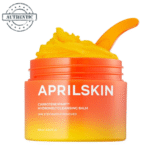
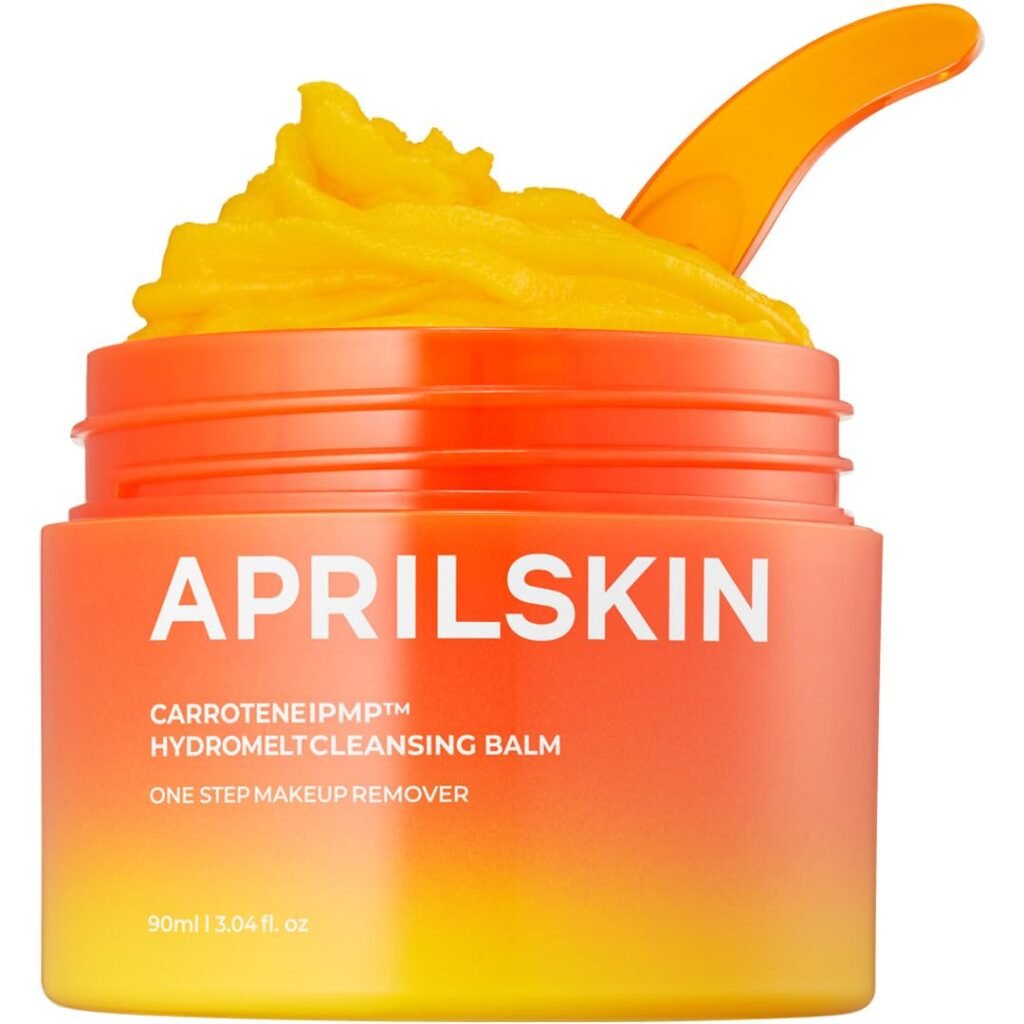
APRILSKIN Carrotene IPMP Hydromelt Cleansing Balm
This is one of the standout products featuring IPMP.
Why it works:
- IPMP fights bacteria during cleansing
- Beta-carotene provides antioxidant support
- Balm texture melts makeup and sunscreen
- Doesn’t strip skin or cause dryness
Best for:
- Acne-prone skin nervous about oil cleansing
- People who break out from traditional cleansing balms
- Anyone wanting antimicrobial benefits in their cleanser
Price: $20.99 (on sale from $29.99)
Real-world results: After 30 days of use, most users report fewer breakouts from cleansing and faster healing of existing blemishes.
Other Products with IPMP
While not as common as other acne ingredients, IPMP appears in:
- Cleansing oils
- Some toners
- Acne spot treatments
- Body washes for back acne
- Scalp treatments for bacterial folliculitis
Tip: Look for IPMP in the ingredient list—it might be listed as Isopropyl Methylphenol or O-Cymen-5-ol.
How to Use IPMP Products
In Cleansing Products
For maximum effectiveness:
- Apply to dry skin
- Let the product sit for 10-15 seconds before massaging
- This gives IPMP time to make contact with bacteria
- Massage for 60-90 seconds
- The longer contact time allows IPMP to work
- Focus on acne-prone areas
- Emulsify properly
- Add water gradually to create milky emulsion
- Continue massaging for 30 seconds
- Rinse thoroughly
- Make sure all product is removed
- Follow with water-based second cleanser
Frequency: Daily use is safe—IPMP is gentle enough for everyday cleansing
In Leave-On Products
If using IPMP in toners or spot treatments:
- Apply to clean skin
- Let it absorb before next products
- Use AM and PM if product allows
- No need to rinse
| Category | Who It’s For |
|---|---|
| Perfect For |
✓ Acne-prone skin needing gentle antimicrobial support ✓ People who break out from oil cleansing ✓ Sensitive skin that can’t handle harsh acne treatments ✓ Those avoiding benzoyl peroxide due to dryness or irritation ✓ Combination skin with occasional breakouts ✓ Anyone double cleansing who wants acne prevention built in ✓ Body acne sufferers (back, chest) |
| May Not Need It |
✗ People with zero acne concerns ✗ Those already using aggressive prescription acne treatments ✗ Anyone allergic to phenol derivatives |
Combining IPMP with Other Actives
IPMP plays well with most ingredients:
IPMP + Salicylic Acid
Combo benefits: Antimicrobial action + pore exfoliation Best for: Moderate to severe acne How to use: IPMP in cleanser, salicylic acid in toner or serum
IPMP + Niacinamide
Combo benefits: Bacteria fighting + pore refining + brightening Best for: Acne with hyperpigmentation How to use: Both can be used in same routine, any order
IPMP + Centella Asiatica
Combo benefits: Antimicrobial + soothing + healing Best for: Inflammatory acne with redness How to use: Both together reduce breakouts and calm skin
IPMP + Beta-Carotene
Combo benefits: Bacteria fighting + antioxidant protection Best for: Acne-prone skin with environmental damage Example: [APRILSKIN Carrotene IPMP Cleansing Balm]
What NOT to Combine
⚠ IPMP + High-concentration benzoyl peroxide: Potentially too drying ⚠ IPMP + Prescription antibiotics: Consult dermatologist (may be redundant)
Safety and Side Effects
Is IPMP Safe?
Short answer: Yes, IPMP has an excellent safety profile.
Approved uses:
- Personal care products
- Cosmetics
- Medical disinfectants
Concentration in cosmetics: Typically 0.1-0.5%
Potential Side Effects
Rare side effects:
- Mild irritation (uncommon)
- Contact dermatitis (very rare)
- Allergic reaction (extremely rare)
For most people: IPMP is very well-tolerated, even by sensitive skin.
Pregnancy and Breastfeeding
Status: Generally considered safe for topical use, but always consult your healthcare provider when pregnant or breastfeeding.
Real Results: What to Expect
Timeline
Week 1-2:
- Fewer new breakouts
- Existing pimples may heal faster
- Less inflammation
Week 3-4:
- Noticeably clearer skin
- Reduced overall acne
- Better texture
2-3 months:
- Significant improvement in acne
- Prevention of new breakouts
- Better skin health overall
Important: IPMP works best as prevention and for mild to moderate acne. Severe cystic acne needs dermatologist intervention.
Common Questions About IPMP
Q: Will IPMP cause purging? A: No, IPMP doesn’t increase cell turnover, so it doesn’t cause purging like retinoids or acids.
Q: Can I use IPMP with retinol? A: Yes, they work through different mechanisms and can be used together.
Q: Is IPMP natural or synthetic? A: It’s synthetic, but that’s not a bad thing—it ensures consistent potency and purity.
Q: Does IPMP work on fungal acne? A: Yes, IPMP has antifungal properties and can help with fungal acne (malassezia folliculitis).
Q: Why isn’t IPMP more popular? A: It’s more common in Asian beauty products. Western markets have been slower to adopt it, but it’s gaining recognition.
Q: Can I use IPMP if I have rosacea? A: Generally yes—IPMP is gentler than many alternatives. However, always patch test.
Q: Will IPMP replace my prescription acne medication? A: No, IPMP is supportive care, not a replacement for prescription treatments. Consult your dermatologist.
The Verdict: Is IPMP Worth It?
For acne-prone skin: Absolutely yes.
IPMP offers something rare: effective acne-fighting action without the harshness, dryness, and irritation of conventional treatments.
It’s particularly valuable in cleansing products where most other acne ingredients don’t work well or get rinsed away too quickly.
Best use case: IPMP as your first-line defense in your cleansing routine, combined with other targeted treatments as needed.
Is it a miracle cure? No. Severe acne still needs professional treatment.
Is it the smartest way to prevent breakouts from cleansing? Yes.
How to Start Using IPMP
Best entry product: APRILSKIN Carrotene IPMP Hydromelt Cleansing Balm
Why start here:
- Cleansing is a daily non-negotiable
- Combines IPMP with other beneficial ingredients
- Low risk of irritation
- Affordable at $20.99
- Easy to incorporate into existing routine
Next steps:
- Use as your first cleanse for 4 weeks
- Evaluate results (fewer breakouts? faster healing?)
- If you love it, look for other IPMP products (toners, spot treatments)
- Combine with complementary acne-fighters like salicylic acid or niacinamide
Final Thoughts
IPMP is the ingredient acne-prone skin has been waiting for—gentle enough for daily use, effective enough to make a real difference, and smart enough to work in oil-based products where other actives fail.
It’s not going to cure severe cystic acne overnight. But for preventing breakouts, supporting clear skin, and making oil cleansing safe for acne-prone folks? IPMP is game-changing.
Ready to try this overlooked powerhouse? Shop APRILSKIN Carrotene IPMP Cleansing Balm and discover what IPMP can do for your skin.